
PLENARY & KEYNOTE LECTURES
The plenary and keynote lectures reflect the congress theme, tracing the transition from established practices to new perspectives across a range of topics in noise control and sound perception.
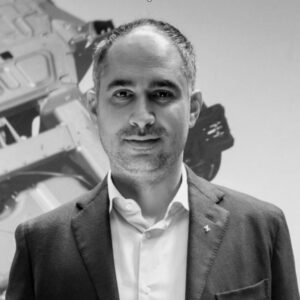
Antonio Palermo
Ferrari S.p.A., Italy
PLENARY LECTURE
NVH & Sound Quality at Ferrari: A 10-Year Perspective on Past, Present, and Future Challenges
Antonio Palermo holds a PhD in Gear Noise and Vibration from KU Leuven (Belgium) and a Master’s Degree in Mechanical Engineering from the University of Calabria (Italy).
Dr. Palermo joined Ferrari in 2015 as a Powertrain Engineer and has served as Performance Manager for NVH and Sound Quality since 2023. His contributions to key powertrain projects include the turbocharged V6 engine powering the 296 and F80 families, as well as the electrification of Ferrari’s product range through the design of its first electric axle and the axial-flux electric motor, both introduced on the SF90 Stradale. His vehicle-level work includes the design of exhaust and intake systems to optimize the sound of V6, V8 and V12 engines; continuous improvement in NVH performance across Ferrari’s product range; and the development of Ferrari Luce, the Company’s first fully electric vehicle, including its electric sound. He is the author of several scientific publications and patents.
NVH & Sound Quality at Ferrari, a 10-years perspective on past, present and future challenges.
Today’s Ferrari product range is the most diverse in the Company’s history, reflecting an evolution that accelerated around 2010. It encompasses internal combustion, hybrid and fully electric models, ranging from track-focused special series to road-oriented sports cars. This growing differentiation extends to every aspect of vehicle performance, including NVH and Sound Quality.
The present Plenary Lecture offers a brief journey through the different branches of physics underpinning that evolution: from predominantly experimental vehicle development to today’s simulations, with their still-imperfect correlation to reality; from meeting fundamental performance targets to refining product positioning through human perception and metrics linking subjective feeling to objective measurements; and from relatively unconstrained design to compliance with increasingly stringent regulations.
Enabling this ongoing journey are greater computational power, more accurate representations of physical phenomena, dedicated noise and vibration techniques such as component-based transfer path analysis (TPA) and, more recently, the widespread adoption of AI.
The lecture’s closing perspective will remain under wraps for now, but its connection to the electric sound of the Ferrari Luce will be revealed at the end.
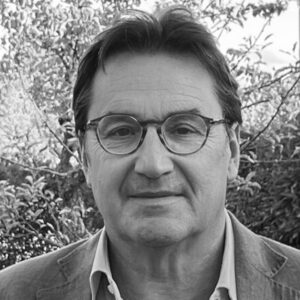
Luigi Maffei
University of Campania “Luigi Vanvitelli”, Italy
PLENARY LECTURE
Multisensory Human-Centered Research: When Acoustics Meets Other Disciplines
Multisensory human-centred research: when acoustics meets other disciplines.
The technological advancements of the last few decades have increasingly made new research tools available to scholars in different sectors. Low-cost and miniaturised measurement devices, virtual and augmented reality software, artificial intelligence platforms, and deep learning models have become widely used in many research fields, such as environmental and room acoustics, speech perception and comprehension, human health and well-being, psychology, and design, in research and in everyday life.
This has created the conditions to overcome the traditional boundaries among the disciplines by stimulating increasingly integrated and multidisciplinary research approaches focused, on the one hand, on the multisensory character of human perception but also on their perceptual, emotional and neuro-psycho-physiological responses.
This keynote presents an overview of research that has contributed to the evolution of this process, highlighting the new approaches and research topics, their applications and practical implications, as well as the future perspectives.

Woon Seng Gan
NTU, Singapore
STREAM 1 KEYNOTE LECTURE
Environmental Acoustic Intelligence: From Perception to Action for Next-Generation Noise Control
Environmental Acoustic Intelligence: From Perception to Action for Next-Generation Noise Control.
Environmental Acoustic Intelligence (EAI) is emerging as a new research paradigm that enables machines not only to perceive and understand complex acoustic environments, but also to select and implement appropriate noise-management actions. Advances in deep learning, multimodal learning, edge intelligence, and generative artificial intelligence are transforming conventional noise monitoring into context-aware systems capable of identifying, localizing, interpreting, and responding to environmental sounds. This keynote presents an integrated EAI framework spanning acoustic perception, representation learning, reasoning, and action. It examines the complementary roles of acoustic scene classification, sound event detection, and sound event localization and detection in capturing the semantic, temporal, and spatial characteristics of noise environments. Recent developments in self-supervised learning, data-centric artificial intelligence, and Large Audio-Language Models are discussed as approaches for reducing annotation requirements and improving scalability, generalization, interpretability, and zero-shot recognition. The presentation then moves beyond perception to consider how acoustic knowledge can support real-world interventions, including adaptive active noise control, intelligent soundscape augmentation, and context-aware environmental noise mitigation. Particular attention is given to the physical and practical constraints that distinguish noise-control systems from conventional recognition tasks, including acoustic-path variations, causality, latency, spatial coverage, computational limitations, and human perceptual responses. Finally, the keynote outlines a future in which EAI systems operate as closed-loop acoustic agents that continuously sense their environments, reason about noise sources and human contexts, select suitable interventions, and evaluate their physical and perceptual outcomes. This progression from passive monitoring to intelligent acoustic action supports adaptive, human-centred, and sustainable noise-control solutions worldwide.

Sabine Langer
Institute for Acoustics and Dynamics, TU Braunschweig, Germany
STREAM 1 KEYNOTE LECTURE
Balancing Acoustics and Aircraft Efficiency: Challenges in Noise Modelling, Prediction and Assessment for Highly-Integrated Future Aircraft
Balancing Acoustics and Aircraft Efficiency:
Challenges in Noise Modelling, Prediction and Assessment for Highly‑Integrated Future Aircraft.
The vision of a climate‑neutral air‑transport system hinges on a substantial increase in overall aircraft efficiency. Gains are expected from the tight integration of propulsion and airframe — for example distributed‑propulsion or BLI (boundary‑layer ingestion) concepts — where the most promising synergies appear at system‑level interfaces across disciplines. Acceptance of such highly integrated aircraft requires a robust acoustic assessment that addresses both cabin and environmental noise. This calls for fundamental research on describing the source mechanisms of tonal and broadband noise, modelling the transfer paths, and integrating preliminary aircraft design with acoustics within a holistic design process. Challenges in noise modelling, prediction, and assessment are encountered for both cabin and environmental noise. Furthermore, it is ultimately desirable to address not only physical sound levels but also how aircraft noise is perceived by passengers and communities. The talk will present an integrated approach that links mixed‑fidelity source modelling, efficient prediction tools, and perception‑based assessment, thereby providing a basis for comprehensive noise evaluation and supporting the societal acceptance of next‑generation, environmentally friendly aircraft technologies.

Wolfgang Kropp
Chalmers University of Technology, Sweden
STREAM 2 KEYNOTE LECTURE
Road Traffic Noise: Opportunities and Challenges of Electric Mobility
Wolfgang Kropp graduated in environmental engineering from TU Berlin in 1986. He obtained his PhD in Applied Acoustics under the guidance of Prof. Manfred Heckl in 1992 at the Institut für Technische Akustik in Berlin. The topic of his PhD was “Modelling tyre/road noise”. In 1998, he was appointed Professor of Applied Acoustics at Chalmers University of Technology, succeeding Prof. Tor Kihlman. His research deals with different areas of applied acoustics, such as building acoustics, vehicle acoustics, active control, and the use of virtual environments to investigate the influence of noise on people. His main passion, however, has always been the modelling of rolling noise, with a strong focus on tyre/road interaction. Later, he also started working on rolling noise and curve squeal arising from wheel–rail interaction.
Wolfgang Kropp was the founder of the MSc programme “Sound and Vibration” at Chalmers University of Technology and has more than thirty years of experience teaching a variety of courses, ranging from introductory courses in acoustics to courses in structure-borne sound, architectural acoustics, and active noise control. He is a member of the Royal Swedish Academy of Engineering Sciences.
Road traffic noise: opportunities and challenges of electric mobility.
Environmental noise negatively impacts public health. Improving the situation requires reducing road traffic noise, one of the main sources of environmental noise. This presentation therefore explores the opportunities but also the challenges associated with the transition towards electric mobility. It discusses the role of tyre/road noise as the main source of future road traffic noise at medium and higher speeds, as well as the Acoustic Vehicle Alerting System (AVAS) at very low speeds. Is there potential to reduce these noise sources, and what would be needed to realise this potential?

Jason E. Summers
ARiA, USA
STREAM 2 KEYNOTE LECTURE
From Ocean Noise to Knowledge: New Frontiers in Underwater Acoustics
Dr. Jason E. Summers is Founder, Managing Member, and Chief Scientist of Applied Research in Acoustics LLC (ARiA), where he leads multidisciplinary research in underwater acoustics, acoustic signal processing, computational modeling, and machine learning. He received his Ph.D. in Engineering Science from Rensselaer Polytechnic Institute, where he developed mathematical and computational models of coupled-room acoustics subsequently adopted by the architectural acoustics community. A National Academy of Sciences/National Research Council Postdoctoral Fellow, he subsequently served as a Research Physicist in the Acoustics Division of the U.S. Naval Research Laboratory, investigating seafloor acoustic scattering, sonar signal processing, and auditory perception. He later led advanced development of physics-based sonar simulation and training systems for the U.S. Navy. Since founding ARiA in 2010, he has directed research programs spanning active and passive sonar, acoustic imaging, ocean modeling, machine learning, and the evaluation of AI-enabled systems. He served as Associate Editor of the Journal of the Acoustical Society of America (2013–2017) and contributed to a Navy development team recognized with the 2009 Secretary of the Navy Innovation Excellence Acquisition Team Award
From Ocean Noise to Knowledge: New Frontiers in Underwater Acoustics.
The ocean is a dynamic acoustic environment. What we record reflects not only the sound sources of interest, but also water-column structure, seabed properties, ambient noise, and the instruments used to measure it. Recovering useful information from these observations remains a central challenge in underwater acoustics.
This keynote explores new directions in that challenge through examples from ocean ambient-noise characterization, acoustic-field reconstruction, active and passive sonar, and synthetic-aperture sonar imaging. Three developments provide a framework: extracting information from sparse, noisy, and incompletely labeled data; combining established acoustic physics with modern computational methods, including physics-informed machine learning, numerical simulation, and surrogate models; and evaluating whether resulting systems remain reliable as propagation conditions, sources, and sensors change.
Underwater acoustics is a demanding proving ground for these developments. Ocean environments vary across space and time, ground truth is often scarce, and synthetic data can be invaluable without fully representing operational conditions. The resulting questions extend beyond sonar to ship and offshore acoustics, environmental noise monitoring, and the assessment of changing underwater soundscapes. In each setting, improvements in modeling and inference matter only insofar as they support defensible conclusions from imperfect observations.
The future of underwater acoustics will not be defined by replacing physical understanding with data-driven algorithms. It will depend on integrating physical models, measurements, and learning methods while treating uncertainty and validation as essential parts of the science. Doing so offers a path from ocean noise to reliable knowledge about sources, environments, and their interactions.

Catherine Guigou
CSTB, France
STREAM 3 KEYNOTE LECTURE
Transmission of Ground-Borne Vibration from Railways into Buildings
Transmission of ground-borne vibration from railways into buildings.
The railway sector has a key role in reducing greenhouse gas emissions. However, such a sustainable transportation mode cannot be developed at the cost of comfort and even health of occupants in buildings close to railway lines. The increase of rail traffic and more specifically freight traffic at night is a major acceptability concern for residents living along railway lines. It is therefore of importance to predict, measure and control ground-borne vibration as well as air-borne and ground-borne noise levels in buildings due to railways, particularly in housing.
The talk will highlight an approach aiming at estimating ground-borne noise, where the whole vibration chain “source / transmission through ground / immission to buildings” is considered in the same way as for transport noise, to allow a separation of responsibilities between railway companies (railway traffic and infrastructure) and building actors.
Power-based quantities defined in European or ISO standards and standardized procedures for characterizing source-receiver vibration systems, such as ISO 20270, are used in the approach for characterizing both railway ground vibration sources and the corresponding structure-borne sound sources in buildings.
The second and main part of the talk will be focused on vibration immission to building, including structure-borne sound transmission from building foundations to the upper floors. This work is carried out at European level in CEN/TC 126/WG2/TG1 to predict structure borne noise from outdoor vibration as a new part of the EN 12354 series. Mitigation measures at building level are also considered in this work and will be presented.

Jeffrey Mahn
National Research Council, Canada
STREAM 3 KEYNOTE LECTURE
The Evolution of Building Acoustic Measurements and Predictions from Individual Elements to Entire Systems
The evolution of building acoustic measurements and predictions from individual elements to entire systems.
A study conducted by John Bradley in Canada found that people living in multitenancy dwellings with lower sound insulation tended to blame their neighbors for being inconsiderate when it was actually the inadequacies in the acoustic design of their building that were at fault. No one likes to hear their neighbors or to have their own private conversations heard by their neighbors. Neighbor annoyance can lead to an unpleasant perception of the building or neighborhood and can potentially lead to social disruption rather than an enjoyable living environment. To better protect residents from unwanted noise in their dwellings, the acoustic requirements in national building codes have evolved over time from focusing on the wall or floor that separates living spaces to considering the buildings as system where the contribution of structure-borne flanking paths may be more important than the direct transmission. While direct transmission through elements remains important, international standards for predicting the apparent transmission loss which includes flanking noise were proposed in the late 1970s and the first European standard was published in 2000. One of the reasons that working in the field of building acoustics is so exciting is that these standards and the described measurement methods continue to evolve today as more flanking facilities are built and more is learned about the transmission of noise in buildings. In fact, most of the ISO standards for making building acoustic measurements or predictions are currently under revision. With the global push for more sustainable building designs, timber and other lightweight building elements have been attracting more attention and the standards, many of which were originally written for heavy, homogeneous elements such are concrete, continue to evolve to be more applicable to timber constructions. This paper gives a historic overview, from the challenge of developing models to predict the transmission loss of lightweight, multi-leaf walls, to the measurement and prediction of flanking noise is buildings constructed from timber elements.

Etienne Parizet
Laboratoire Vibrations Acoustique, INSA Lyon, France
STREAM 4 KEYNOTE LECTURE
Noise and Vibration Perception in Transport Systems: Metrics, Multimodal Interactions and Perspective on New Mobility
Noise and vibration perception in transport systems: metrics, multimodal interactions and perspective on new mobility.
In a vehicle (car, train, or aircraft), passengers are exposed to noise and vibrations, which can sometimes originate from the same source. Interactions may occur (for example, the presence of vibrations can alter the perception of noise discomfort). It is also known that vibrational stimuli exerted on the seat can supplement auditory stimuli, a principle used, in particular, in car audio systems. For whole-body vibrations, research has identified sensitivity as a function of signal frequency and established the relationship between vibration intensity and the perceived intensity. In multimodal situations, models have been proposed to predict overall discomfort based on acoustic and vibratory signals. However, these models appear to have room for improvement—the integration of these stimuli is not yet fully understood. Furthermore, the assessment of discomfort can depend on the participant’s activity, which is important in trains or aircraft (and perhaps soon in autonomous vehicles). Finally, new electric powertrains, which significantly alter the behavior of the engine source, may change the nature of predictive models.
We will present a brief overview of the results in this field, as well as research that may be required due to recent developments in vehicle technology.

Juan Tu
Nanjing University, China
STREAM 4 KEYNOTE LECTURE
Sound-Mediated Modulation of Emotion-Related Brain Function
Juan Tu, Ph.D., professor, the director of Department of Acoustic Science and Engineering, the School of Physics, Nanjing University. She joined Nanjing University in 2007, after receiving her PhD degree in bioengineering from the University of Washington. Her research interests focus on medical ultrasound, nonlinear acoustics, acoustic cavitation and its related applications in biomedicine. So far, she has published more than 200 academic papers (H-index 39) and over 20 patents. She was selected for the National High level Talent Support Program, the Ministry of Education’s New Century Excellent Talent Support Program, the Jiangsu Province Distinguished Professor Program, and the Jiangsu Province 333 High level Talent Training Program. She was also awarded multiple domestic and international honors, including the Second Prize of the National Science and Technology Progress Award, the Young Scientist Award of the International Ultrasound Conference, the Frederic Lizzi Young Scientist Award of the International Society for Therapeutic Ultrasound, the First Prize of the Ministry of Education’s Natural Science Award, and the “Wei Rongjue Award” of the Chinese Acoustic Society. Currently, she serves as the Executive Fellow of the Chinese Acoustic Society, Fellow of the American Acoustic Society, Member of the IEEE (Medical Ultrasound) Technical Committee, and the Associated Editor of J. Acoustic. Soc. Am., Ultrasonics and BME Frontiers.
Sound-Mediated Modulation of Emotion-Related Brain Function.
Music and natural soundscapes, such as birdsong, flowing water, rainfall and ocean waves, are increasingly studied for their potential to alleviate emotional distress and support cognitive function. However, the acoustic modulation factors of these effects and the underlying brain mechanisms remain incompletely understood.
Here we present our investigations of sound-mediated modulation of emotion-related brain function, integrating quantitative acoustic analysis with ultrafast functional ultrasound imaging. Building on acoustic characterization of music used for emotional relaxation and studies of birdsong and other natural soundscapes, we examine how variations in sound parameters are associated with regional brain responses. Moreover, high-frame-rate ultrasound imaging captures cerebral microvascular haemodynamics with high spatiotemporal resolution, providing an indirect measure of brain activity through neurovascular coupling. This approach allows us to map the distribution and temporal evolution of sound-evoked haemodynamic responses and investigate their dependence on acoustic parameters.
The presentation focuses on linking measurable sound characteristics to functional responses in brain regions involved in emotional processing. It might provide favorable guidance for the selection of acoustic stimuli and the design of restorative soundscapes. These studies also illustrate how ultrasound can connect acoustic signal analysis with functional brain assessment, providing a quantitative basis for investigating the mechanisms and potential applications of sound-mediated emotional modulation.